13/03/2026

Via privata Molina 80/7 – 80/9, Vignate (MI)

02 95361055

info@fitex.it

In industrial and professional sewing, precision is everything, which is why even a slight misalignment can compromise the quality of the finished garment. That’s why more and more operators are choosing to rely on tools such as magnetic guides: simple, but essential.
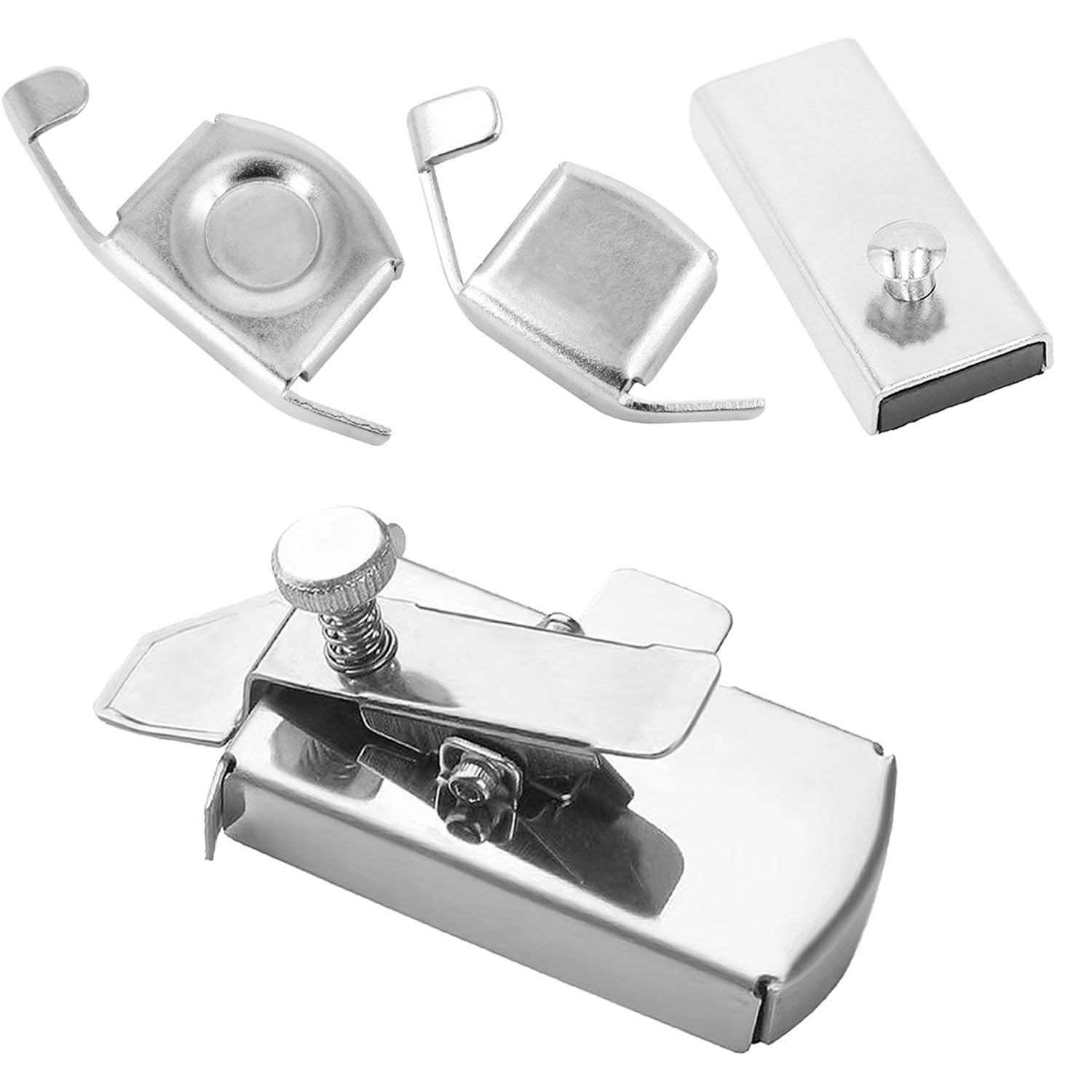
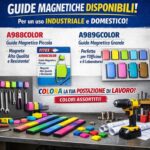
The magnetic guide is a small metal accessory with a magnetized base, designed to adhere to the sewing machine table. Its function is to help the operator maintain a regular seam allowance without having to mark the fabric or make continuous visual checks.
It is very easy to use: place the guide on the metal surface of the sewing machine, at the desired distance from the needle, depending on the margin you want to maintain. Once secured, the edge of the fabric slides along the guide during sewing, keeping the line constant. It is particularly useful for straight, long seams.
The magnetic guide is a seemingly simple tool, but one that can make a big difference in terms of precision, productivity, and final quality. Let’s take a look at the main ways you can use it in your work.
Increased precision
The magnetic guide allows you to maintain the same margin, stitch after stitch, helping you to achieve greater precision in your work. This translates into garments with greater symmetry and no differences between one side and the other. Visibility also plays an important role in precision: a good sewing machine lamp reduces errors on repetitive seams.
Production speed
Using a magnetic guide reduces measurement and control times: the operator can concentrate exclusively on guiding the fabric, without worrying about maintaining the line visually.
Reduction of human error
A magnetic guide eliminates most of the inaccuracies caused by fatigue, distraction, or inexperience. It is particularly useful in production contexts and also provides important psychological support for workers.
If you notice irregular stitches or small jams during particularly long sewing jobs, it may be useful to also check the bobbin and hook, which are two components that greatly affect the regularity of the stitch.
The magnetic guide can be used on all flat fabrics, whether light or heavy. It is perfect for:
On stretchy or very thin fabrics, it may be useful to use it in conjunction with specific presser feet to maintain optimal alignment. If you often work with thin or stretchy materials, a guide on how to choose the right presser foot can also help you understand which one to use.
Before you start sewing, place the guide on the machine plate at the desired distance from the needle (e.g., 1 cm). Test it on a scrap piece of fabric to make sure the fabric feeds smoothly. While sewing, keep the edge of the fabric close to the guide and only move it when you change the seam allowance.
To help you select the most suitable magnetic guide, Fitex outlines the practical and technical factors to consider when making your choice:
● the material of the work surface, which must be metal
● the size and shape of the guide: longer guides provide greater stability, while more compact versions are ideal for working in confined spaces
● the strength of the magnet, which must be sufficient to hold the guide in place throughout the entire sewing process without damaging the plate or making it difficult to remove
● the choice of quality products that are easy to position and compatible with the intensity of the work carried out on a daily basis.
As we have seen, magnetic guides have many advantages, but mistakes can also be made. Let’s take a look at the most common ones:
● placing the guide too close to the needle, which risks limiting the movement of the presser foot
● not securing the guide properly, which can cause it to move during sewing
● using it on non-magnetic surfaces or on sewing machines with plastic surfaces
● pushing the fabric too hard against the guide, resulting in deformation of the seam.
Does the magnetic guide damage the sewing machine?
No, when used correctly, it leaves no marks and can be removed without leaving any residue.
Can I use the magnetic guide on all sewing machines?
As it is magnetic, it can only be used on metal surfaces. It will not adhere to machines with plastic bases. For some electronic machines, it is always advisable to check the manual for any instructions on the use of magnetic accessories.
How do I adjust the seam allowance?
To adjust the seam allowance, manually move the guide relative to the needle. Each position corresponds to a different seam allowance.
Does the magnetic guide also work on thick fabrics?
Yes, it is also perfect for denim, canvas, or felt. The important thing is that the fabric remains flat on the surface.
What is the difference between sewing with a magnetic guide and freehand sewing?
With the guide, you get greater regularity and fewer errors, especially on long or repetitive seams.
Magnetic guides are one of those tools that make the difference between craftsmanship and truly professional production. At Fitex, you can find durable magnetic guides that are compatible with all major industrial sewing machines.
Want to further improve the quality of your stitching? Check out our article on how to get the most out of your thread-cutting scissors:
And if you also design paper patterns, read the complete guide to using a dress form:
📲 Download the Fitex app now to browse the complete catalog and order the professional accessories you need.



Every day, a promotion on an item we have in stock: join our mailing list and take advantage of the benefits!
Already know which item you need?
Order it directly from our app, available for Android and iOS.